

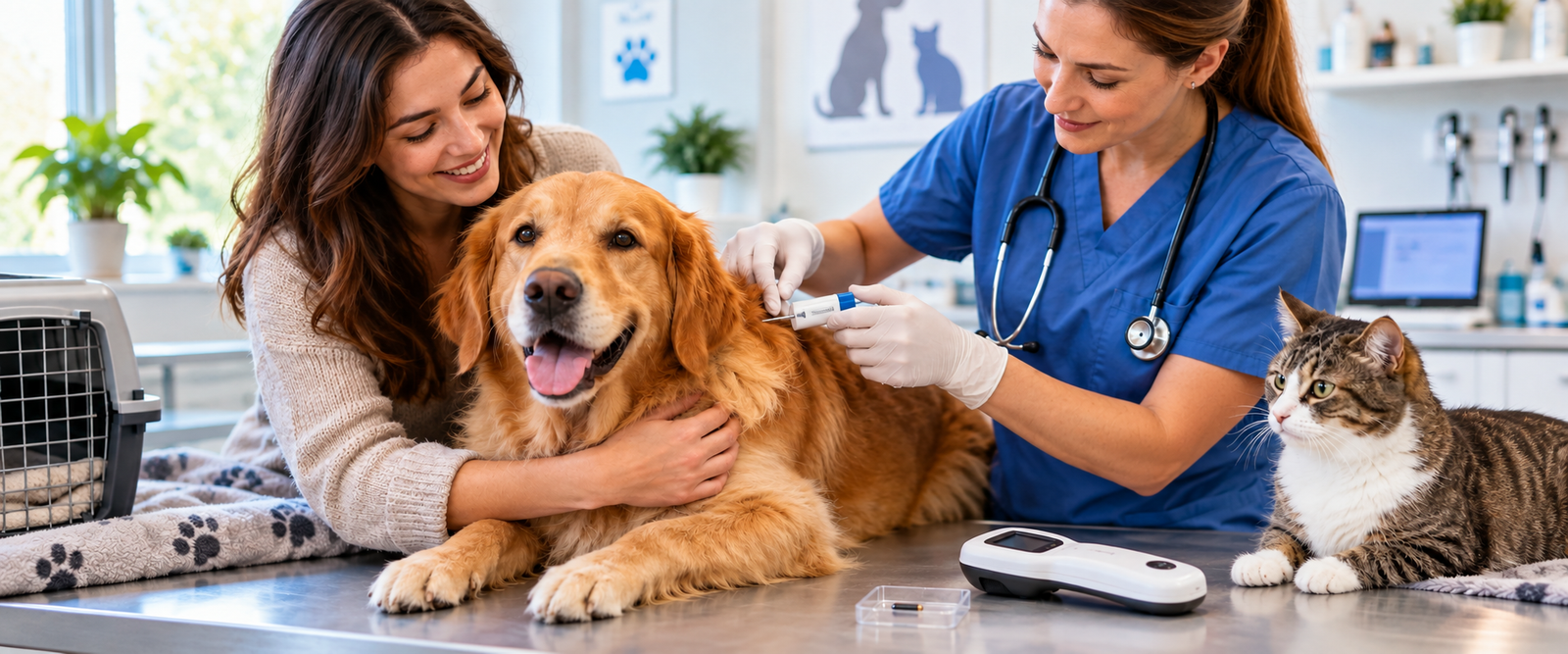
Your pets are family and microchipping adds an added assurance of their safety. There are limits to co lars and ID tags, they can be lost or broken and a microchip provides a permanent ID. Microchips are smal, discreet, and permanent IDs slid under a pet’s skin by the veterinarian which stores a number that can help ID your lost pet if they’re found. Microchips are a cheap way to reunite you with your pet and the vet clinic/animal shelter with your information on the microchip.
What are Microchips?
Microchips are about the size of one grain of rice. They are placed under the skin between a pet’s shoulder blades.
Microchips function like a permanent, paperless ID. Unlike a GPS tracker, a microchip does not allow you to see your pet’s movements. Instead, it stores a number that is your ID. With a scanner, the microchip’s number is linked to your contact and information through a microchip registry. Learn more about pet microchipping
1. Why is microchipping important?
Permanent ID. Not all collars and ID tags stay on a pet, some can become loose, break, or become illegible. Microchips designed for pets will last their lifetime with no batteries or cellular connections. They’ l never need to be charged or replaced.
2. How Microchips Can Help Lost Pets Find Their Way Home
Microchips can greatly increase the likelihood of lost pets finding their way home since they allow veterinary staff and employees of shelters to identify and scan the pet. If the microchip has an ID number, then they can easily reach the registered owner and contact them.
3. Ease of Microchipping
Many pet owners believe microchipping their pets is a more complicated and painful process. However, microchipping is done just like any other routine veterinary injection. A veterinary technician will inject the microchip in the same fashion as other injections, and it usually takes less than 10 seconds to complete. Your vet can answer any questions and quel any concerns you may have about microchipping your pet.
4. Microchips Have an Advantage
Since microchips do not have any sort of power source, they do not have to be replaced like batteries. They are powered by an external scanner which activates the microchip. Since scanners are designed for inclusion of microchips, there is no maintenance needed by the
owner.
5. Microchipping May Be Important for Pet Travel
If you are considering international travel with your pet, you should be aware that many countries require that pets be microchipped before they wil allow for travel.
As with most things related to travel, regulations will vary among your potential destinations. Make sure to contact your vet as early as possible to find out what the requirements may be.
Keep Your Pet’s Microchip Information Updated
A microchip is simply the first step; you have to register it and update contact information in the system when necessary.
An outdated contact number can deter potential pet finders from trying to reunite you with your furry family member. A microchip is intended to be a complementary measure to collar and tags.
For more information on microchipping your pet or other safety measures you can use to protect your pet contact the Alpenlofts Veterinary Hospital.
FAQs About Pet Microchips
1. What is a pet microchip?
A microchip is a smal identification device that is inserted under the skin and contains a unique ID. It is scanned and the ID is linked to the owner’s contact information.
2. Are Pet Microchips GPS trackers?
No. Microchips do not provide real-time location data. They are mainly scanned as an identification measure when a lost pet is brought to a veterinary clinic or shelter.
3. Is Microchipping Your Pet Painful?
Think about a regular injection. That’s about how painful microchipping is. The microchip is injected just under the skin and takes just a few seconds. Your vet can walk you through the process.
4. How Long Does a Pet Microchip Last?
Microchips are designed to last a lifetime. They don’t have batteries that will need to be replaced.
5. Does my Pet Still Need a Collar After Microchipping?
Yes. A microchip is a permanent ID, but if your pet loses their collar, a visible ID on a collar is very important.
6. What Should I Do After Microchipping My Pet?
You will need to register the microchip in your name. If you move or change your information at any time, make sure to register that info as well.


