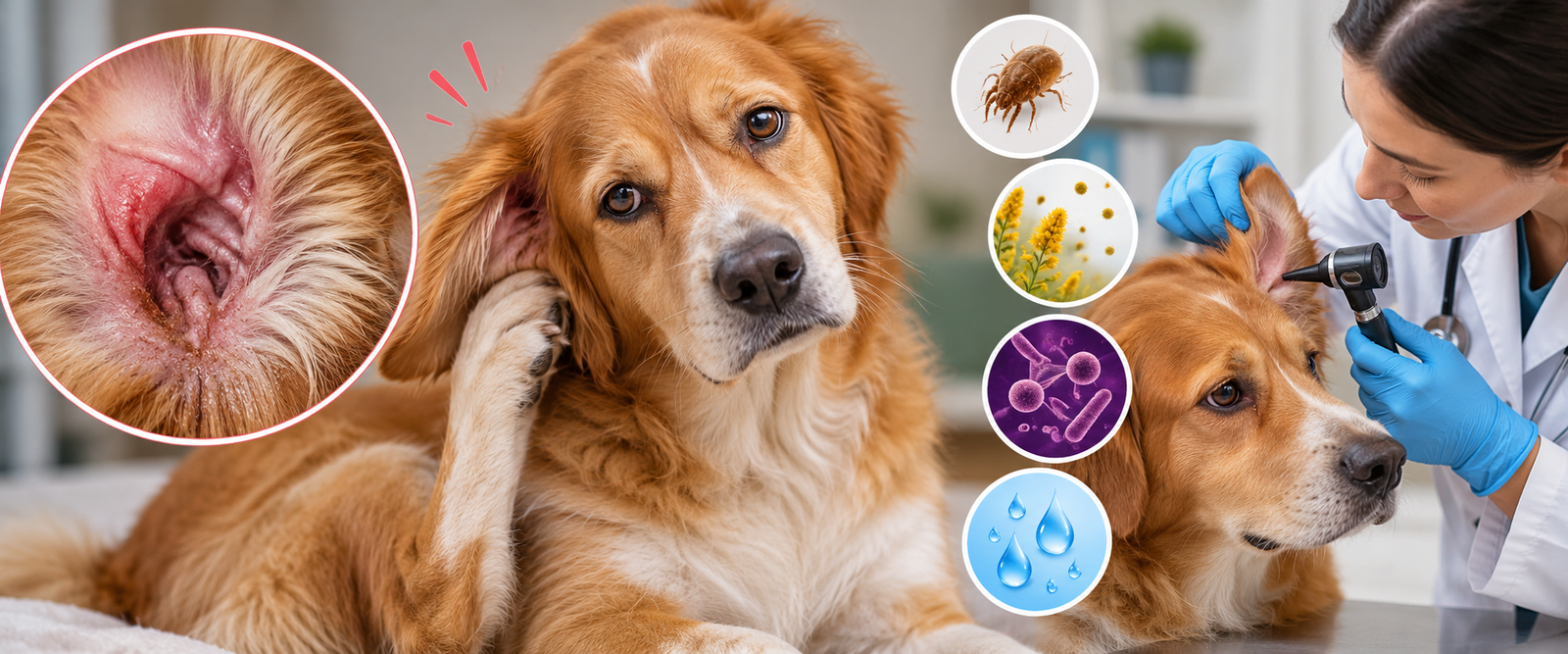
Ear infections crop up a lot in dogs, and they can really make your dog miserable — itching, head shaking, redness, soreness, maybe even some smelly gunk coming out. Sometimes it’s just a little irritation, but if you let it go, it can get serious fast and even affect their hearing. The good news? If you know what to watch out for, you can act early and help your dog feel better.
Dogs with floppy ears, pups that love swimming, or those that scratch their heads a lot—they’re all at risk. So keeping an eye on your dog’s ears just comes with the territory when you’re a pet owner.
Spotting the Signs
Ear infections can show up overnight, and dogs aren’t shy when something’s bugging them. Here’s what you might notice:
● Lots of scratching or pawing at the ears
● Frequent head shaking or tilting to one side
● Redness or sweling inside the ear
● Discharge from the ear that may look brown, yelow, or almost black
● An unpleasant smel coming from the ears
● They don’t want you to touch their ears and may pull away when you try
● Scabs or crusting at the ear opening
● Walking off balance or stumbling, especially if it gets bad
On top of that, some dogs might get grumpy, restless, or lose interest in play because they just feel lousy. If you spot these symptoms, don’t just hope it’ll clear up—set up a vet visit to figure out what’s really going on.
Why Do Dogs Get Ear Infections?
Different things can lead to ear infections, and it helps to know the underlying causes to treat and prevent them.
● Bacteria and yeast love a warm, damp ear canal. If the ears become inflamed , those bugs can multiply quickly and cause all sorts of problems.
● Alergies (to food or things in the environment) can set off inflammation and often significantly affect the ears . Dogs with frequent ear issues might need alergy testing.
● Moisture is a big culprit—whether it’s from swimming, baths, or just not drying well. Water that hangs around in the ears is an Ideal condition for bacterial or yeast growth.
● Ear mites or Foreign objects lodged in the ear—like grass seeds—can irritate the canal, leading to bigger problems.
● Some dogs just have ear shapes that trap moisture or limit airflow —think floppy ears, tight canals, or breeds with excessive hair around their ears. Because so many issues cause similar symptoms, the vet’s exam is the safest way to figure out what’s really going on.
How Vets Treat Ear Infections
First, the vet needs to identify the underlying cause —bacteria, yeast, mites, allergies, or something else. They might look in the ear and take a quick sample to Examine under a microscope
From there, treatment could mean prescription ear drops, medicine for inflammation, or Medication to manage allergies. Sometimes a professional cleaning at the clinic is part of the plan.
Don’t grab leftover meds, Human ear drops , or random remedies from the internet—some can do more harm than good, especially if the eardrum is affected . Always finish any course of treatment, even if your dog seems to feel better . And if the vet asks you to come back for a recheck, follow through—Persistent infection can come back even worse.
When Should You Call the Vet?
Reach out to your vet if your dog’s ears stay itchy, have unusual ear discharge, are red or smelly, or your dog keeps shaking their head. Getting on top of things early makes life easier for both you and your dog.
If your dog suddenly seems in serious pain, is off-balance, can’t walk straight, repeatedly tilts their head, or starts vomiting, get to the vet fast. Those signs mean the infection might be deep, and that’s not something to mess around with.
And if these infections keep coming back, ask your vet about allergies, chronic skin issues, or ear anatomy—sometimes, there’s an ongoing cause that needs attention.
Keeping Ear Infections at Bay
Check your dog’s ears regularly —look for redness, swelling, discharge, or strong smells. Dry their outer ears after swimming or baths. When it comes to cleaning, don’t go overboard and never stick swabs or anything deep inside. Just use ear cleaners the vet recommends, and only as needed.
Taking care of your dog’s overal health, keeping allergies in check, and attending regular veterinary checkups can stop a lot of problems before they start.
For general questions about symptoms and next steps, online vet care may also help you understand whether your dog needs an in-person examination. However, an online consultation cannot replace a physical ear examination when an infection is suspected.
FAQs
1. Can a dog’s ear infection clear up on its own?
Not usually—a real infection usually sticks around until you treat it properly. It’s always safest to get a vet’s opinion.
2. How long does it take for an ear infection to heal?
Simple cases often clear up in a week or two with the right treatment. More stubborn or repeat infections might need more time and follow-up.
3. Can I clean my dog’s infected ears myself?
Don’t clean or treat a painful or swollen ear without veterinary advice before talking to your vet. They’ll show you what to use and how to clean safely, if needed.
4. Are certain dogs more prone to ear infections?
Yes—Dogs with floppy ears, narrow ear canals, frequent swimming habits, or allergies get more ear issues.
Takeaway
Ear infections are no fun, but catching the early signs, getting timely treatment, and sticking to good ear care routines make a huge difference. If your dog is scratching , shaking, or just not acting right, ca l Alpenlofts Veterinary Hospital to talk things over
and schedule a checkup. Fast action keeps your dog happier and their ears healthier in the long run.